How Working Adults Can Create Their Own Generative AI Tools
@buildaiapplab
November 10, 2026 · 6 min read
Why learn to build with generative AI?
Generative AI has moved from research labs into everyday work. Tools that write emails, summarise documents, or generate images are now common, but most people use them as they are. The real value comes when you can shape these models to solve your own problems. For working adults, learning how to do this without a programming background opens up new ways to improve their daily tasks. This article explains what is involved in picking up this skill and what to expect from a structured classroom course designed for busy professionals.
What does building an AI app mean for non-programmers?
When people hear "build an AI app", they often imagine writing complex code or training neural networks from scratch. In practice, modern platforms let you work with pre-trained models through visual interfaces. You connect components, set parameters, and test outputs. The thinking is more like logic and design than software engineering. You decide what input the app should accept, what the model should do with that input, and how the result should be presented. This mirrors how you might set up a spreadsheet macro or design a simple workflow in a business tool.
A no-code approach removes the syntax barrier. You learn how to prompt models effectively, how to structure data for better results, and how to handle errors or unexpected outputs. These skills transfer across different AI tools because the underlying principles of model behaviour stay the same. For a working adult, the goal is usually to automate a repetitive task, generate drafts, or analyse information faster. A short course can give you enough foundation to build a prototype that does exactly that.
One common example is a tool that takes meeting notes and turns them into action items and summaries. Another might be a chatbot that answers questions about company policies. The process of building these involves defining the problem, choosing the right model, testing the output, and refining the instructions until the result is reliable. The satisfaction comes from seeing your own idea working in a few hours rather than weeks.
The phrase "build an AI app" might sound ambitious, but in a classroom setting you work step by step. Instructors guide you through the interface, explain what each component does, and help you troubleshoot when the output is not what you expected. By the end of the second day, most participants have a working app they can share with colleagues. This hands-on experience builds confidence and gives you a template you can reuse for other problems.

What a two-day classroom course covers
A typical course for working adults focuses on practical outcomes. The first day introduces the core concepts: what generative AI models can and cannot do, how to write effective prompts, and how to set up a no-code development environment. You experiment with a few pre-built examples to understand the mechanics. The second day is dedicated to building your own project. You identify a task from your work, design the input and output, and iterate until the app runs smoothly.
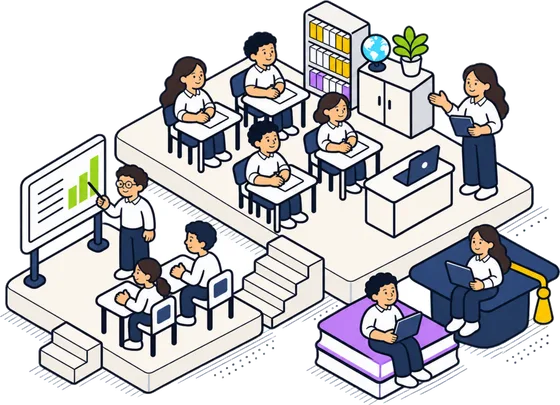
The classroom format matters. Being in a room with other learners and an instructor means you can ask questions immediately, see how others approach the same problem, and get feedback on your design choices. This is especially valuable for people who have not worked with AI before. The social proof of seeing peers succeed also reduces the intimidation factor.
Many courses are funded by programmes like SkillsFuture in Singapore, which makes them affordable and accessible. The emphasis is on practical skills that you can apply right away, not on theory or history. You leave with a real app and the know-how to create more on your own.
What to look for in a course
If you are considering such a course, here are a few things to check:
- The course uses a no-code or low-code platform so you do not need programming experience.
- You get time to build your own project, not just follow along with demos.
- The curriculum covers testing and iteration, because the first version rarely works perfectly.
- There is support after the course, like access to resources or a community forum.
- The course is short and fits around work hours. Two days is a common and effective duration.
Working adults need courses that respect their time. A two-day format is intense but focused. You do not have time to wander into tangents. The best courses have a clear schedule, a well-defined project goal, and instructors who keep the pace moving.
Common challenges and how to overcome them
New learners often struggle with prompt design. It feels like guessing until you understand that models respond better to specific instructions with examples. A good course will teach you how to structure prompts and how to test variations systematically. Another challenge is knowing when a model's output is good enough. Perfectionism can slow you down. The trick is to set clear acceptance criteria before you start testing, so you know when to stop refining.
Data privacy is another concern. If you are building an app that uses company data, you need to understand how the platform handles that data. Many no-code platforms offer data isolation or on-premise options. A classroom course should cover these considerations so you can build responsibly.
Finally, there is the question of maintenance. An app you build in two days might need updates as models change or as your needs evolve. The best courses teach you how to maintain your app, not just how to create it once. This includes version control, monitoring output quality, and making small adjustments without starting over.
What you gain from the experience
Beyond the technical skill, learning to build an AI app changes how you think about problems. You start seeing opportunities to automate or augment your work. You become more critical of AI tools because you understand their limitations. And you gain a sense of agency. Instead of waiting for IT to build something for you, you can prototype a solution in a day and show it to stakeholders. This is a valuable capability in any role.
The phrase "build an AI app" is used to describe the core activity of the course, but the outcome is broader. You learn a process: define, prototype, test, refine. That process applies to many kinds of problems beyond AI. It is a methodology for innovation that you can reuse throughout your career.
Many participants find that the confidence they gain from building one app spills over into other areas. They start experimenting with other no-code tools, they ask more questions about the technology they use at work, and they become advocates for practical AI adoption within their teams. The ripple effects of a two-day course can last much longer than the time spent in the classroom.